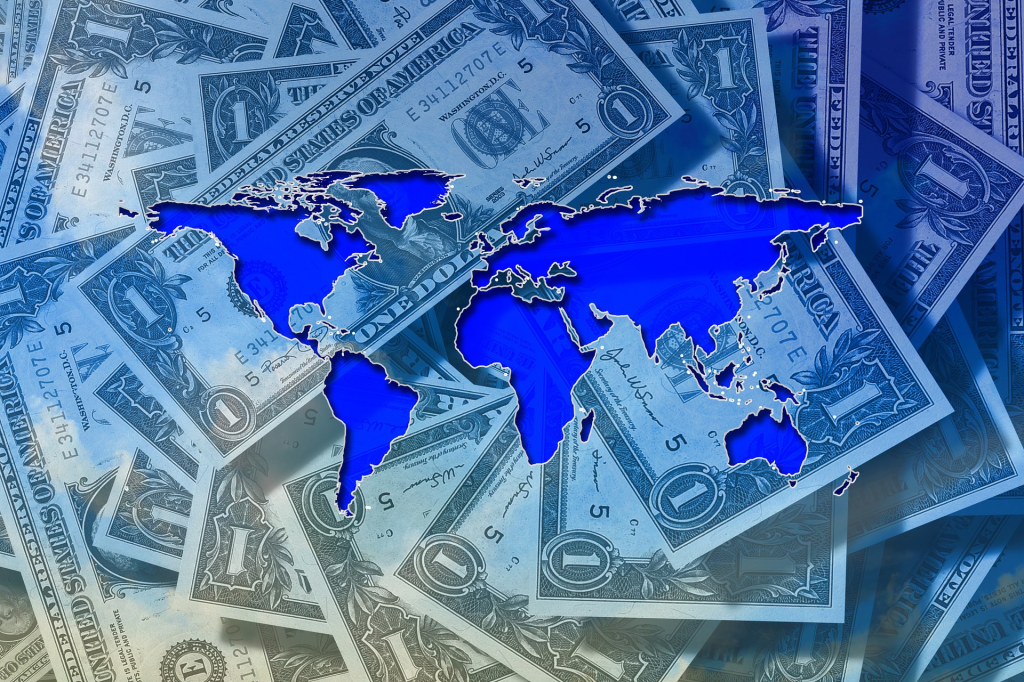
Will the Dollar Milkshake Cause a Global Currency Crisis?
Imagine a game of musical chairs — but with currencies.
As the music speeds up, everyone scrambles for the same chair: the U.S. Dollar. That, in a nutshell, is Brent Johnson’s now-famous “Dollar Milkshake” theory — a bold prediction that the global thirst for dollars could leave the rest of the world’s currencies flat on their faces.
But is this just another doomsday story tailor-made for financial Twitter? Or are we already watching the early scenes of a currency crisis movie?
Let’s dig deeper — and more importantly, let’s see if the data backs it up.
The Milkshake Recipe: What Exactly Is the Theory?
Brent Johnson, CEO of Santiago Capital, offers a provocative view:
The global economy is like a milkshake — a mix of liquidity created by central banks after 2008.
When the U.S. Federal Reserve tightens monetary policy (raises interest rates, shrinks its balance sheet), it effectively sucks up that milkshake — draining liquidity not just domestically, but from everywhere.
Countries that have borrowed heavily in dollars suddenly find themselves gasping for breath.
Their local currencies weaken, making dollar-denominated debts much harder to repay.
Meanwhile, the strong dollar becomes a magnet for more global capital — reinforcing the cycle.
In simple terms:
“When the U.S. tightens, the whole world pays the price.”
Does the Data Back It Up?

Source: Economic Times
It’s easy to call a theory bold — but what do the numbers say?
- Global non-bank dollar-denominated debt has ballooned to over $13 trillion (BIS 2024 data).
- In 2022–23, currencies like the Japanese Yen, the British Pound, and even the Euro faced sharp devaluations as the Fed raised rates at the fastest pace since the 1980s.
- Emerging markets like Turkey, Argentina, and Pakistan experienced brutal dollar squeezes, with their currencies falling over 30–50% at different points.
Even mature markets are feeling it:
- The UK had to step in with emergency bond-buying operations in 2022 as pension funds faced a dollar-liquidity crisis.
- Japan burned through over $60 billion of reserves to defend the Yen in 2023.
Bottom line?
The Milkshake effect may not be uniform — but it’s certainly not fiction.
Why Hasn’t the Full Crisis Erupted Yet?
If the theory is so solid, why aren’t we already knee-deep in a global meltdown?
Because the real world fights back:
- Central banks in Europe, Japan, and elsewhere went with their own rate hikes or currency interventions to stem the outflows.
- Countries like China are tightly controlling capital movement, insulating their currencies from free-fall.
- The U.S. itself benefits from a strong but not too strong dollar — too much strength hurts U.S. exports, tech profits, and even Wall Street.
Plus, global investors are smarter today. Many emerging markets built stronger reserves post-Asian Financial Crisis (1997) and 2008 GFC to guard against exactly this kind of squeeze.
So yes, the Milkshake effect is real — but the timeline might be longer, messier, and full of unexpected twists.
Signs That the Milkshake May Still Spill
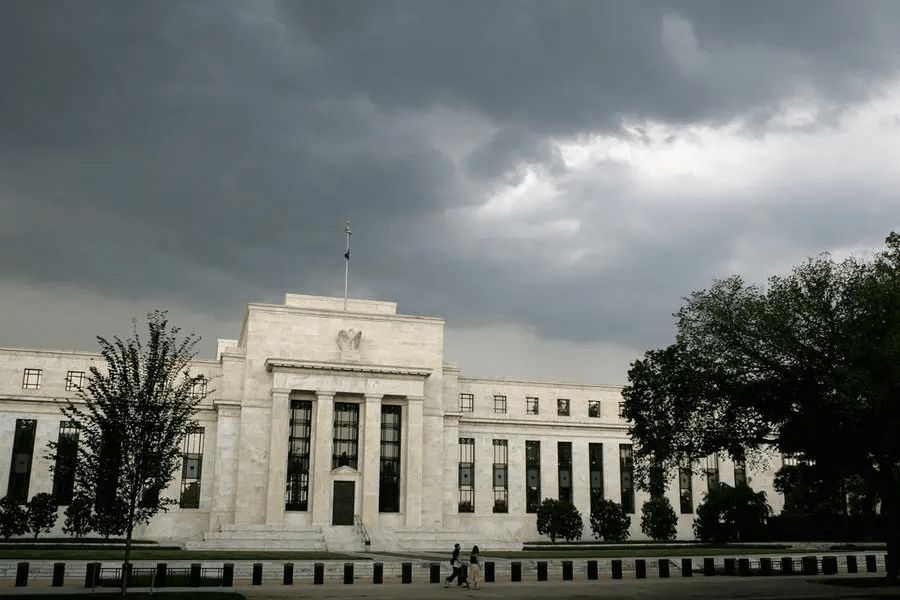
Want to spot a Milkshake Crisis before it hits the headlines? Watch for these warning lights:
- Emerging Market Debt Defaults: Sri Lanka in 2022 was just the tip of the iceberg. Watch for nations like Egypt, Kenya, and Argentina struggling with dollar repayments.
- Swap Lines Opening: The Fed quietly re-opened swap lines in 2020 during COVID panic. If they activate again, it’s a major Milkshake red flag.
- Surging Dollar Funding Costs: If LIBOR, SOFR, or cross-currency basis swaps blow out again, it means dollar demand is crushing liquidity.
- Gold and Bitcoin Surges: Ironically, fear of the dollar’s strength often drives capital into perceived “anti-dollar” assets.
- Political Pressure on the Fed: If U.S. corporations, farmers, or politicians start yelling about the “too-strong dollar,” you’ll know the music is reaching a crescendo.
Right now? We’re seeing flickers — but not fire. Not yet.
Could the Dollar Actually Break Itself?
Here’s the curveball Brent Johnson himself acknowledges:
If the dollar gets too strong, it could cause so much global damage that even the U.S. suffers.
Exports would collapse.
Emerging markets would default.
Foreign investments would vaporize.
Global trade would seize up.
At that point, even Washington would be forced to act — either by pushing the Fed to cut rates or by direct intervention to weaken the dollar.
In other words, the dollar could win the battle… but lose the war.
Myth, Partial Truth, or Imminent Disaster?
Like most powerful financial ideas, the Milkshake Theory isn’t pure gospel — but it isn’t nonsense either.
Dollar dominance is a real force, backed by global debt, financial plumbing, and investor psychology.
However, history shows that the world rarely goes down without a fight — and policymakers today are armed with lessons from past crises.
If we see another round of Fed hikes, geopolitical shocks, or global debt rollovers in 2025–2026, though… don’t be surprised if the Milkshake floods over.
Conclusion: Are We Sipping the Milkshake — or About to Drown?

The “Dollar Milkshake” theory forces us to confront an uncomfortable truth:
The same global system that built decades of prosperity might be sitting on a self-destruct button — and the U.S. holds the remote.
Whether this leads to a few messy financial accidents or a full-blown, system-wide crisis depends on what happens next — not just in Washington, but in boardrooms, central banks, and elections around the globe.
Is the Dollar Milkshake a ticking time bomb — or an overhyped ghost story for finance nerds? Drop your thoughts below!


 Financial Realtalks
Leave a comment